8 hr
Western Sicily Discovery: Segesta, Erice & Trapani Salt Marshes
Journey through ancient ruins, medieval hilltop villages, and shimmering coastal salt flats on this full-day adventure
Reserve
Three millennia of Sicilian history, from Elymian temples to windmill salt harvests
Hand-picked by our editors — only the best 8 experiences from 23 reviewed.
Verified partners for Segesta Erice and Salt Pans tours, free cancellation where available, and instant confirmation on every booking.
8 hr
Journey through ancient ruins, medieval hilltop villages, and shimmering coastal salt flats on this full-day adventure
Reserve
8 hr 30 min
Journey through millennia of Sicilian heritage visiting medieval hilltop towns, working salt flats, and ancient Greek ruins
Reserve
9 hr
Explore medieval hilltop villages, savor wine and lunch at a countryside estate, and witness ancient salt harvesting traditions
ReservePrices from verified partners. Availability updates in real time at checkout. Free cancellation policies apply where shown.
Every Segesta Erice and Salt Pans tour side-by-side — duration, what's included, how you redeem.
| Experience | Duration | Rating | Transfers | Skip-the-line | Guide | Small group | Price | |
|---|---|---|---|---|---|---|---|---|
|
Guided Experience Most popular
Western Sicily Discovery: Segesta, Erice & Trapani Salt Marshes
|
8 hr | ★ 4.3 | ✓ | ✓ | ✓ | ✓ | €70 | Book → |
|
Guided Experience
Western Sicily Discovery: Erice, Trapani Salt Pans & Segesta Temple
|
8 hr 30 min | ★ 4.4 | ✓ | ✓ | ✓ | ✓ | €99 | Book → |
|
Guided Experience
Erice, Marsala & Salt Pans Day Trip from Palermo
|
9 hr | ★ 4.7 | ✓ | ✓ | ✓ | ✓ | €113 | Book → |
All prices from verified partners. Availability and exact terms confirmed at checkout.
Independent travel allows for a personalized pace through these Sicily landmarks, whereas an organized segesta erice and salt pans tour minimizes logistical strain for those prioritizing comfort. Visitors who value autonomy often find the flexibility of independent exploration superior, while those seeking effortless logistics prefer the structured nature of segesta erice and salt pans tours.
| Feature | Top pick Independent Exploration | Organized Tour |
|---|---|---|
Logistical Effort |
High self-management | Fully managed service |
Depth of Historical Context |
Requires personal research | Guided commentary included |
Flexibility of Schedule |
Complete control of itinerary | Fixed stops and timings |
Cost |
Lower per-person expense | Higher inclusive pricing |
Travel Stress |
High responsibility for driving | Relaxed passenger experience |
Parking and Navigation |
Self-managed requirements | None required |
| See tickets → |
Verdict: Securing segesta erice and salt pans tickets for a guided option suits travelers wanting stress-free transit, while independent planning rewards those who prefer to linger at their own discretion.
Choose your ticket, select your date, and reserve in under two minutes. Secure checkout handled by our verified partner.
Instant confirmation by email, with a mobile voucher you can save offline. No printing, no queuing at a collection desk.
Arrive at the entrance, show your voucher on your phone, and walk in. Most tickets include priority or skip-the-line access.
Practical details for Segesta Erice and Salt Pans tickets straight from our verified partners — hours, access, rules, and how to get there.
Contrada Barbaro, 91013
Main ticket office near the parking area.
Open in Google MapsFollow the A29D autostrada and take the Segesta exit; parking is located near the entrance.
Wear comfortable walking shoes suitable for gravel paths and hilly terrain. A hat and light clothing are recommended during summer visits to manage the Mediterranean heat.
Standard backpacks are permitted, but avoid bulky luggage as walking paths can be uneven and steep. No formal security checkpoint is required for entry.
Photography for private purposes is permitted throughout the park. The use of tripods or professional lighting equipment is typically restricted unless authorized in advance.
The site features significant inclines and unpaved paths which may be challenging for visitors with mobility aids. Motorized wheelchairs cannot be transported on the internal park shuttle.
Mobile phone use is permitted, and the area has cell service. However, please be considerate of others attending performances in the ancient theater.
The park is family-friendly, though paths are not ideal for strollers. Children under 18 often qualify for free entry, so carry identification for age verification.
There are limited dining options within the park grounds. Visitors are encouraged to bring bottled water, especially during the summer months, as shade is scarce.
Dogs are allowed inside the park provided they are kept on a leash at all times. Larger dogs must wear a muzzle.
The Segesta Archaeological Park provides a shuttle service to help visitors reach the ancient theater at the top of the hill. It is recommended to use this to conserve energy in the heat.
Best time to go, insider tips, nearby landmarks, and the cancellation fine print — flip through to skim what matters to you.
How crowds, weather, and events shift across the year.
Mild temperatures and blooming landscapes make this an ideal time for exploring.,Summer
Small details that turn a good visit into a great one.
Use the park shuttle to reach the theater; it saves time and physical exertion.,Footwear
Non-bookable sights within a short walk — free to visit, easy to pair.
A historic monument located nearby in Calatafimi.
Flexible, no hidden fees.
Entry tickets are generally non-refundable once purchased. Ensure your schedule aligns with the site opening hours before confirming your booking.
Hand-picked options within walking distance — pick a district for vibe, or a specific hotel for convenience.
Various local guesthouses and B&Bs in the town center.
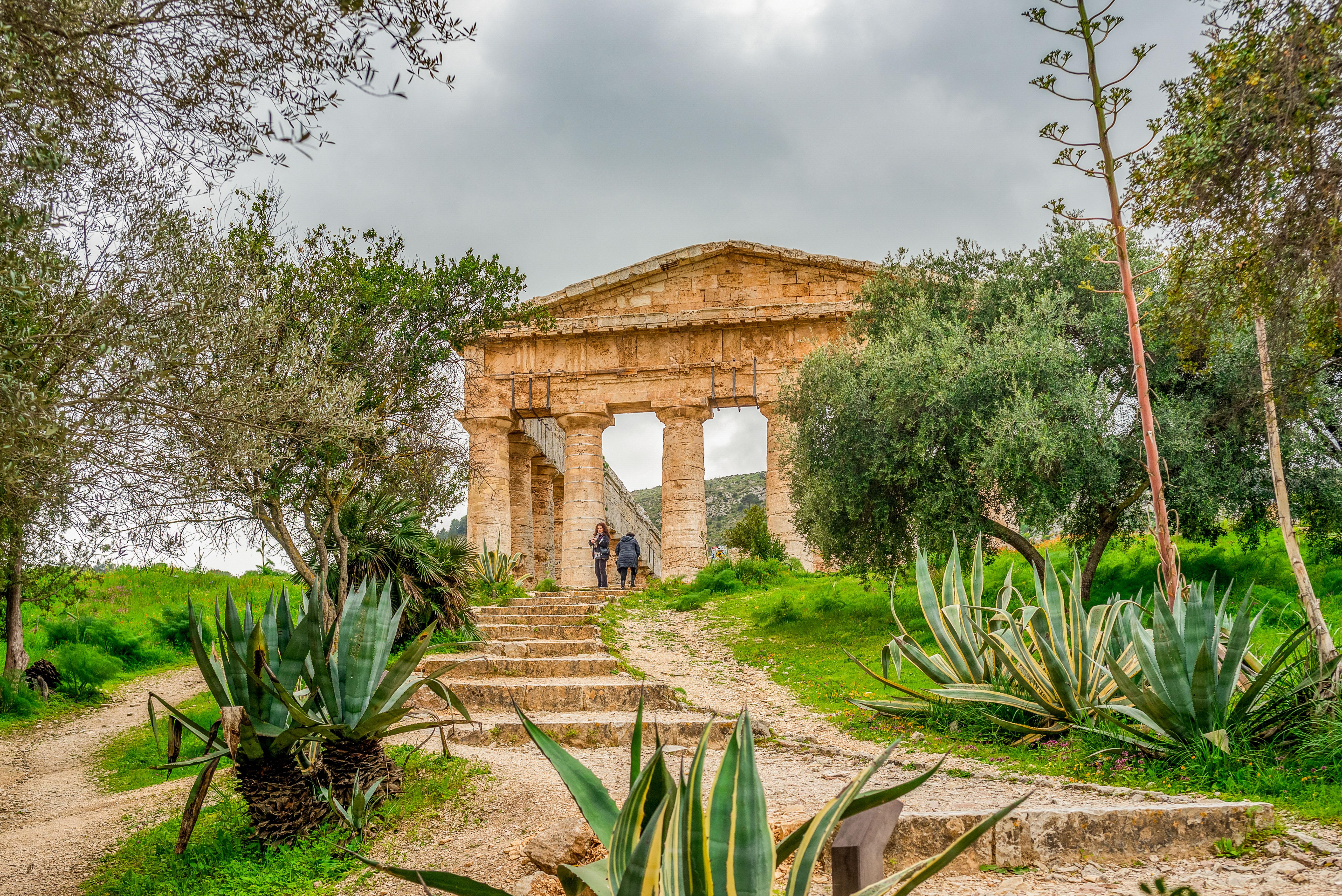
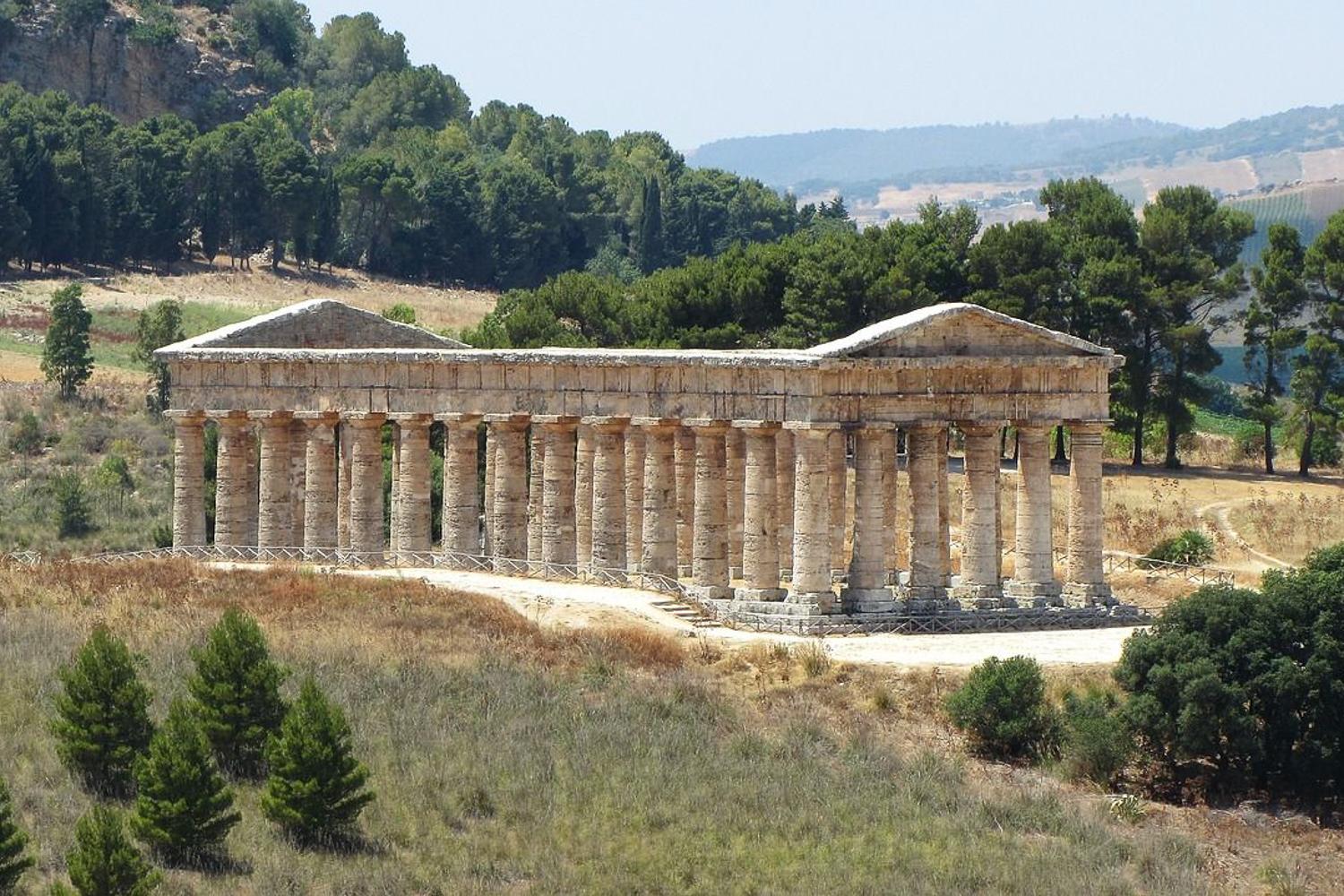
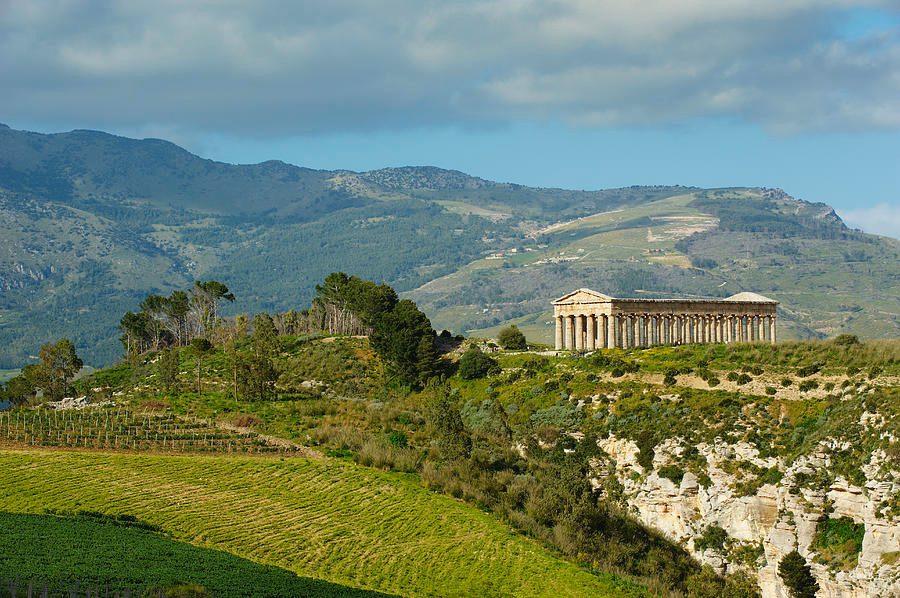
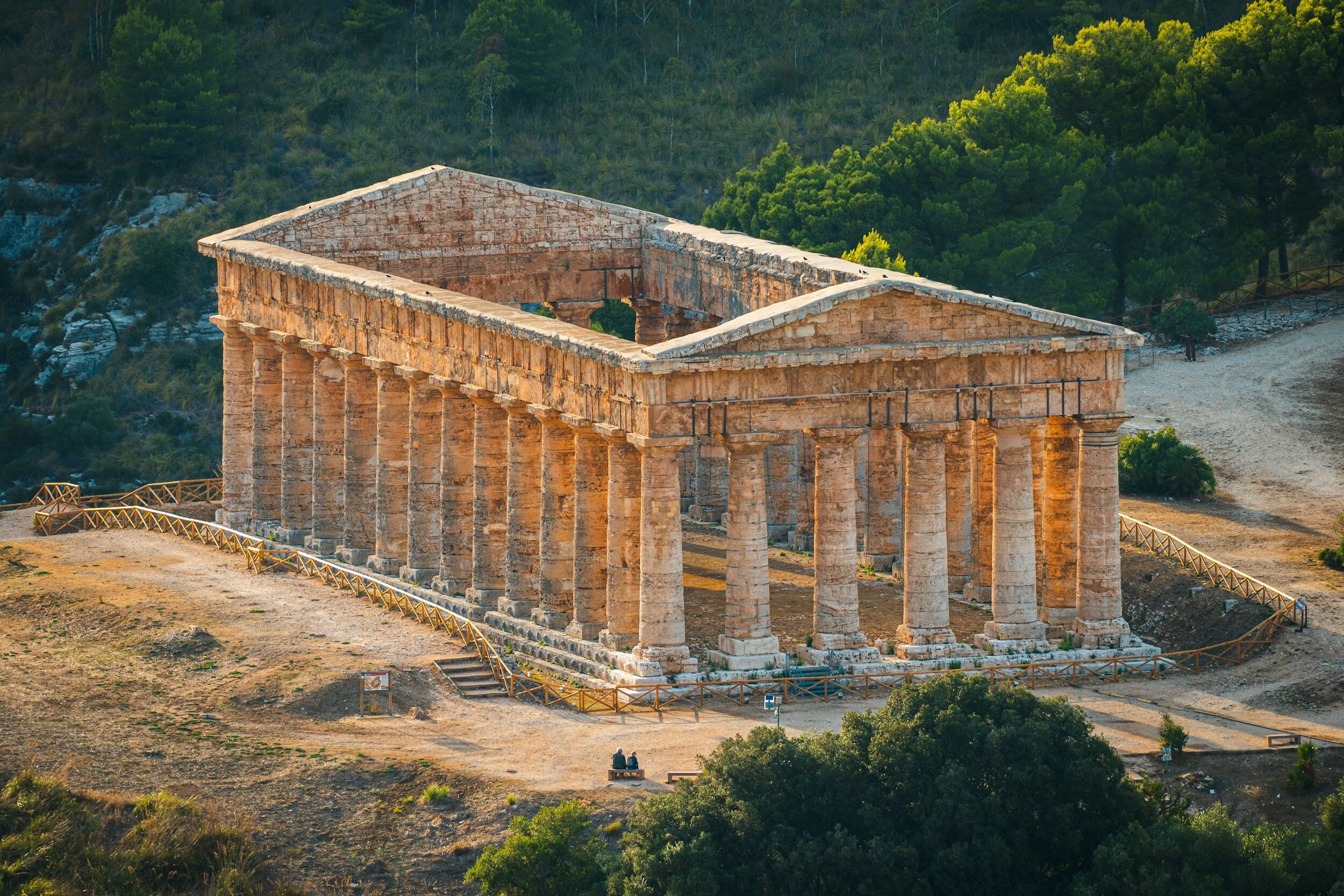
The Doric temple at Segesta stands unfinished after 2,400 years, its 36 columns never fluted, its cella never roofed. Construction halted when Athens lost the Peloponnesian War in 404 BCE, cutting off funds the Elymian city had secured by claiming Trojan ancestry.
The temple's isolation on a windswept hillside 15 kilometres from any modern settlement preserves the structure's original relationship to the landscape: positioned to command views across three valleys, it served as both sanctuary and territorial marker for a people whose origins remain debated by archaeologists.
Segesta's theatre, carved into Monte Barbaro 400 metres uphill from the temple, seats 4,000 spectators in a semicircle facing north toward the Gulf of Castellammare. Built in the third century BCE after the city allied with Rome, the theatre's orientation breaks Greek convention by prioritizing panoramic views over optimal acoustics. Summer performances of classical drama continue to draw audiences who watch actors against the same Mediterranean backdrop that Hellenistic crowds saw. The archaeological park extends across 47 hectares, encompassing residential terraces, a mosque foundation from the Norman period, and a medieval castle built atop Elymian fortifications.
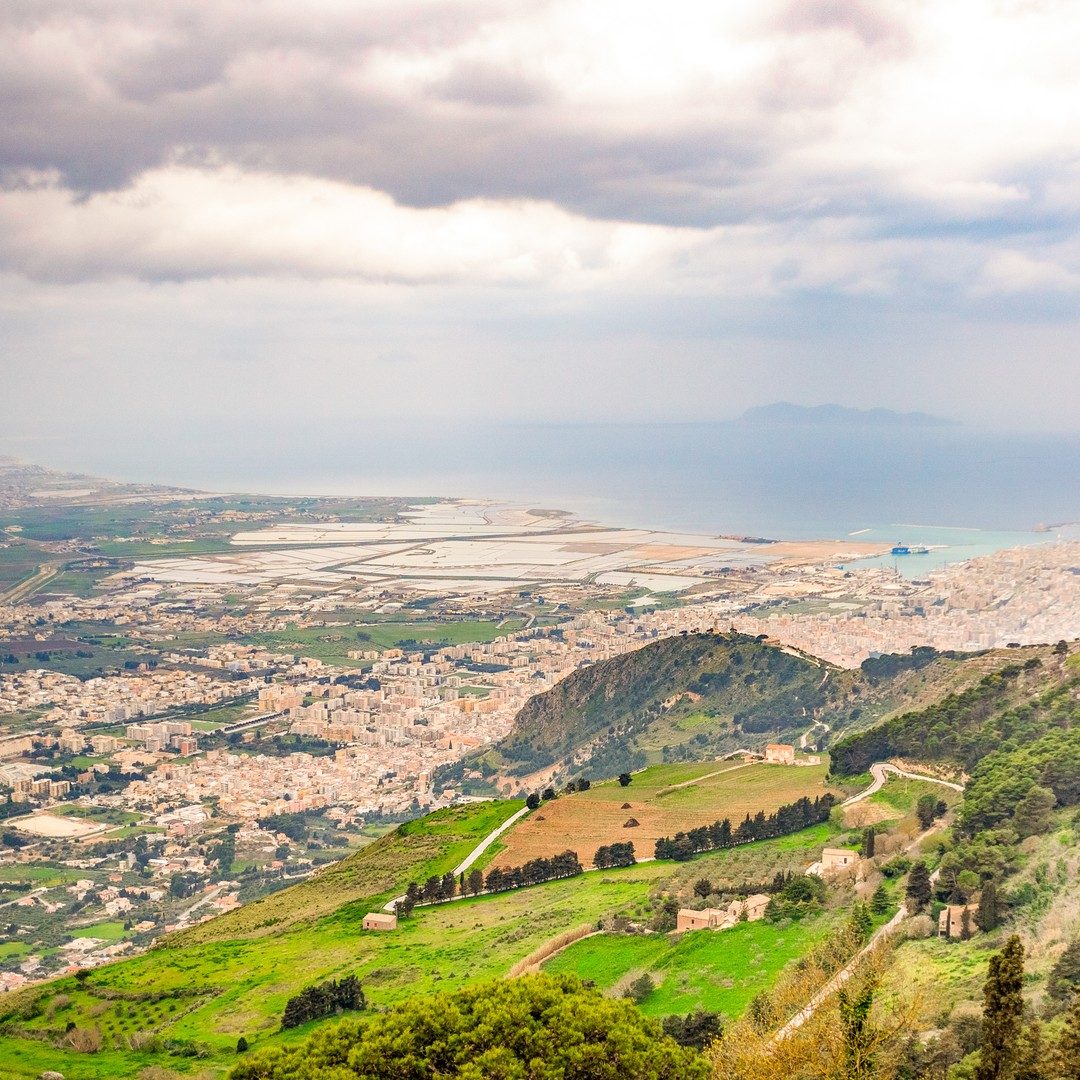
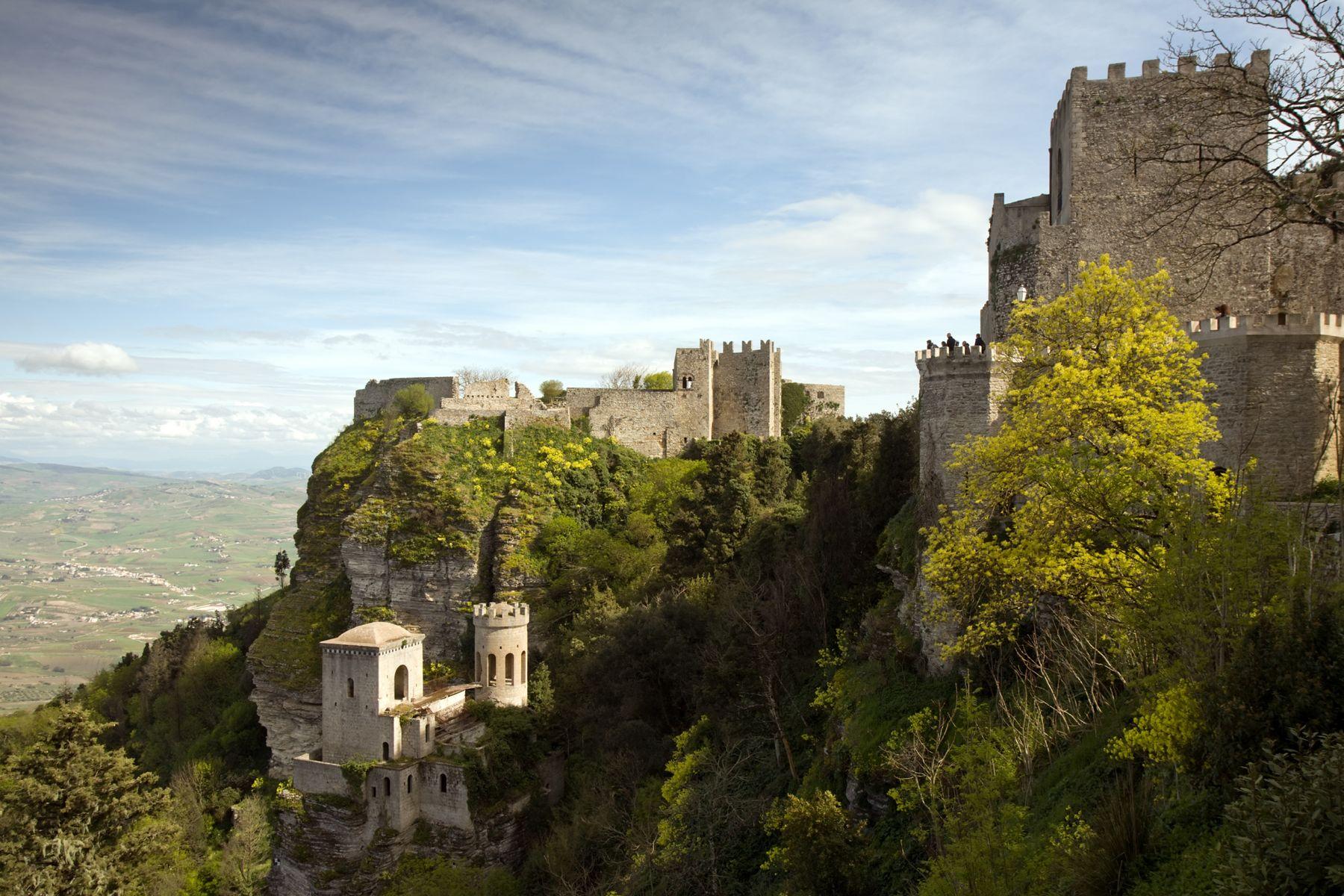
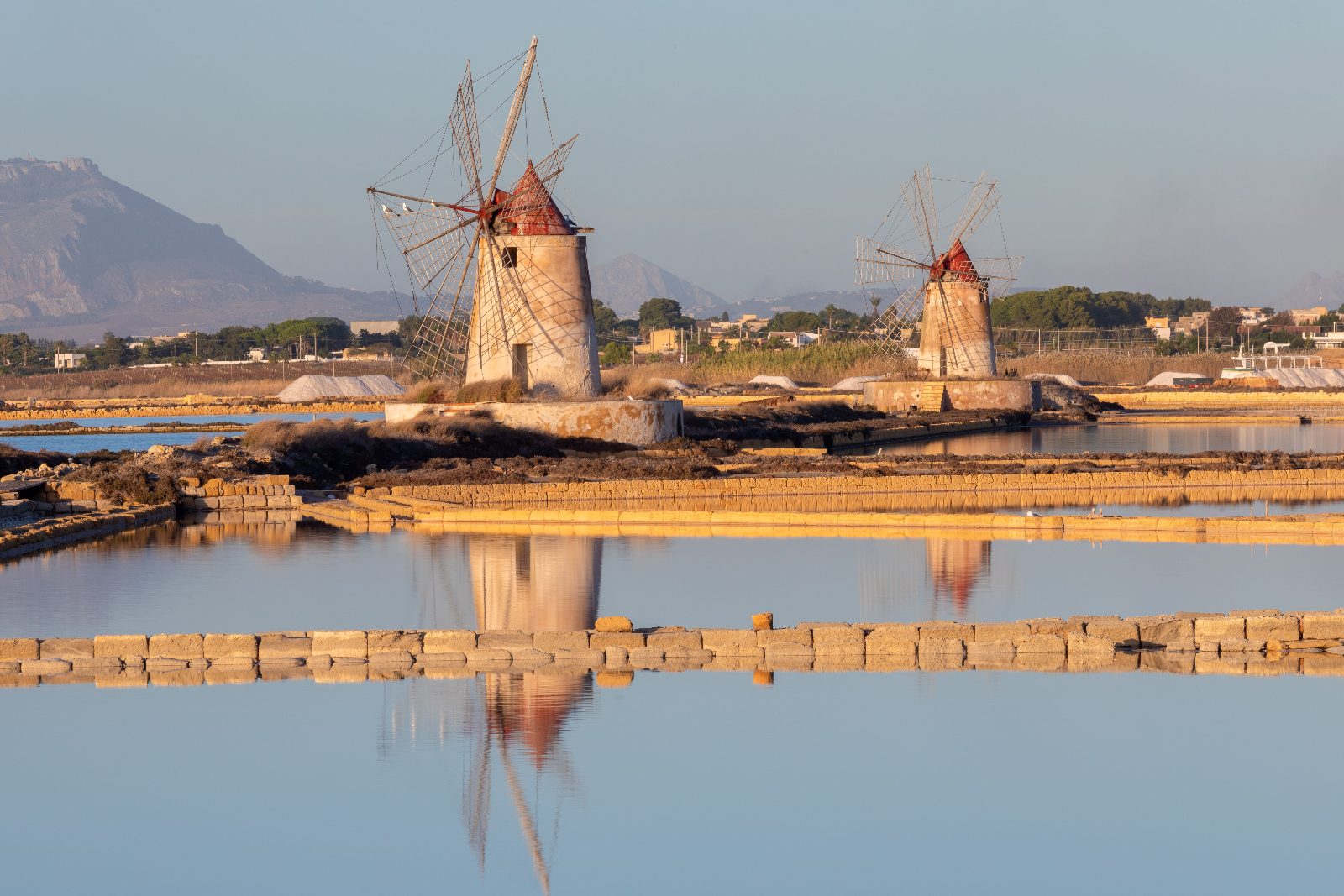
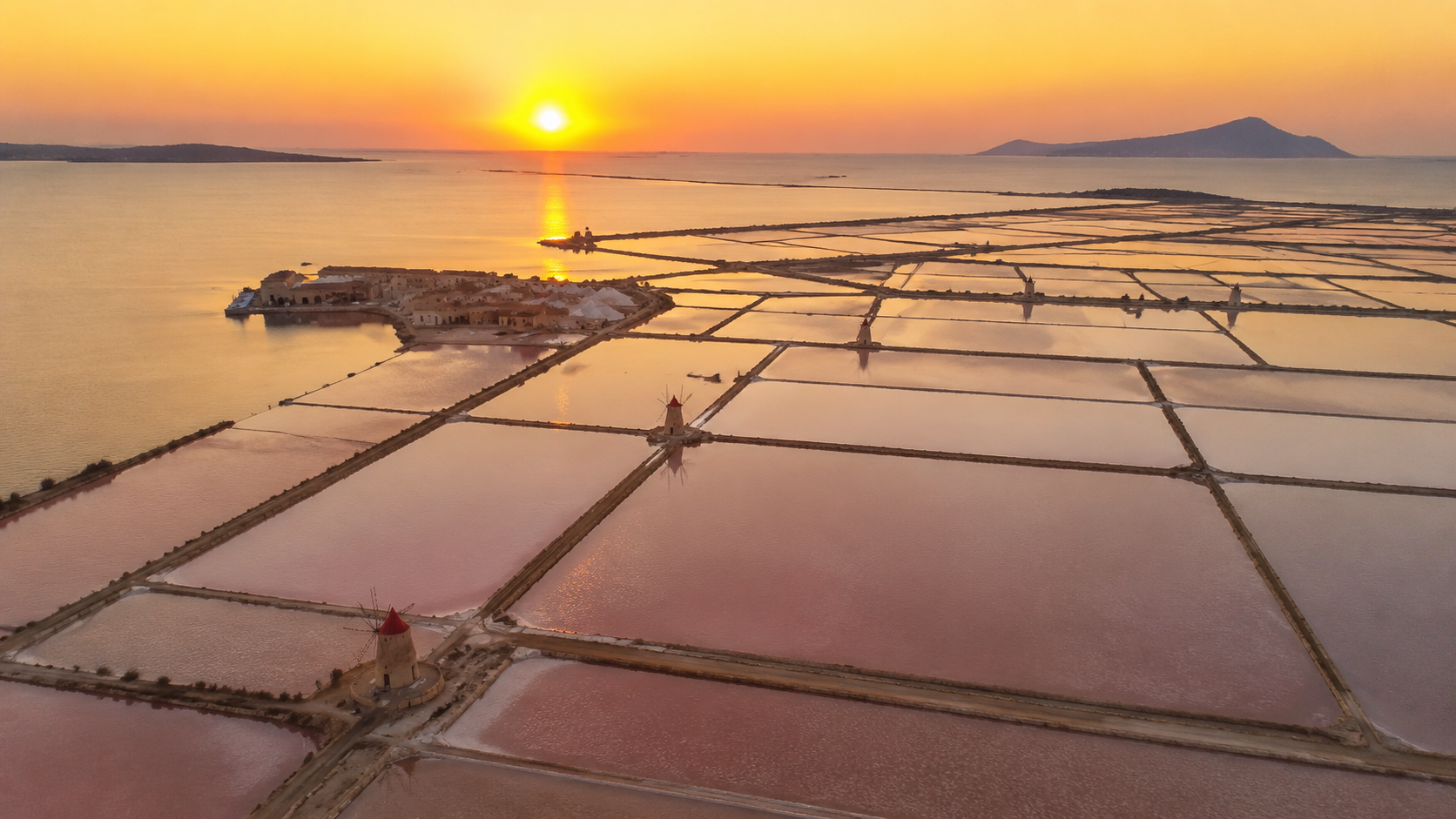
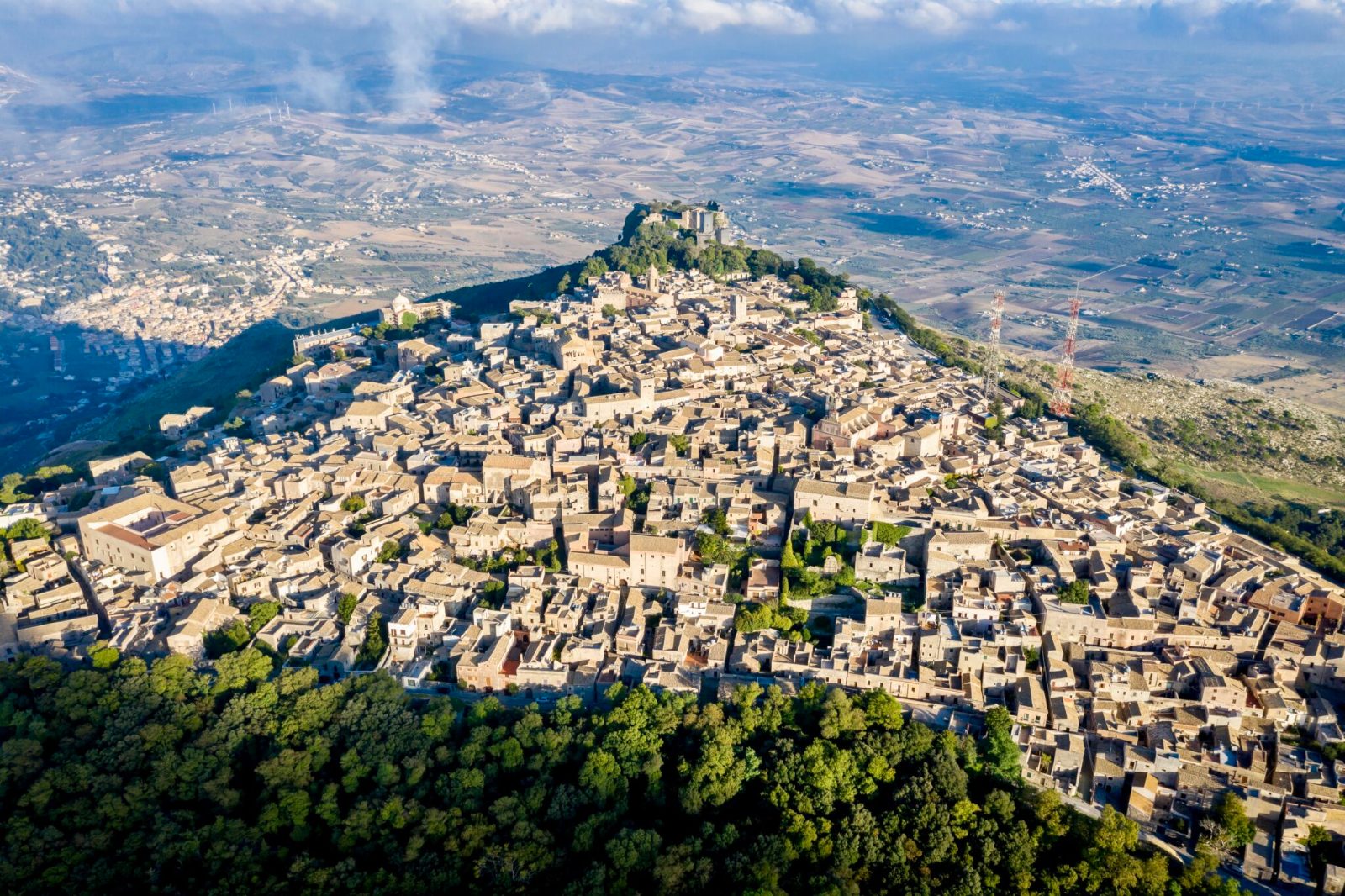
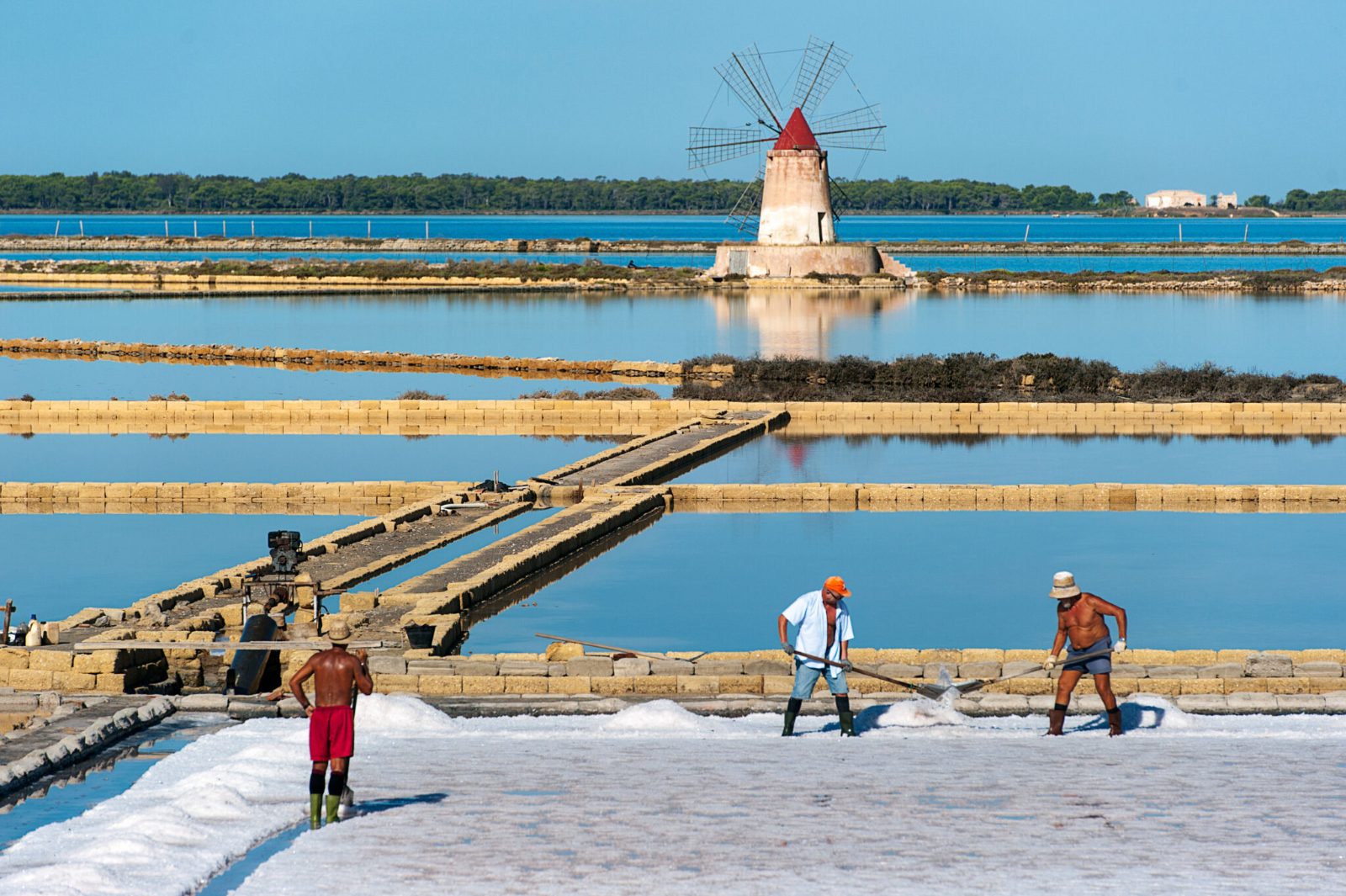
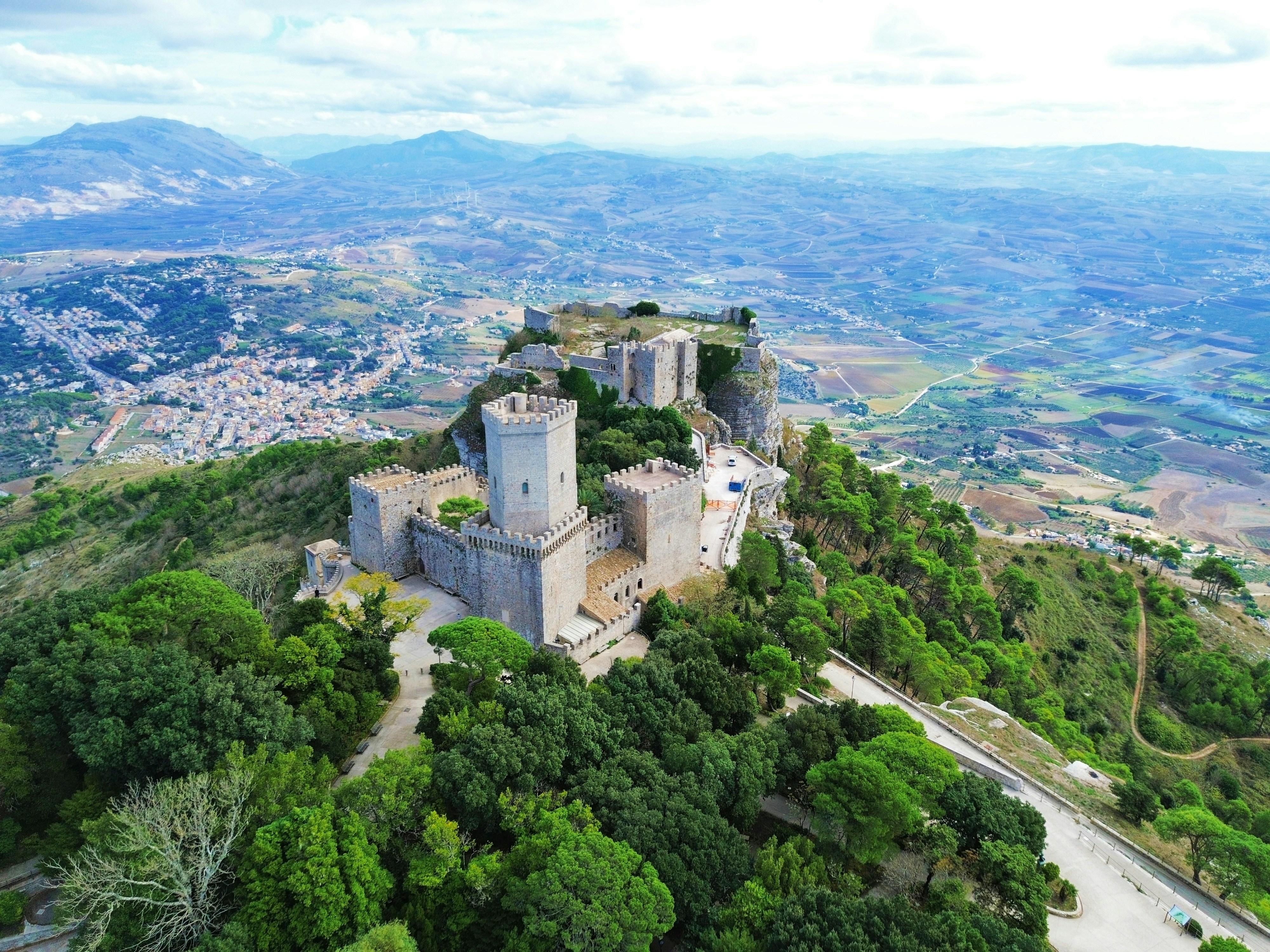
Twelve kilometres northeast, Erice occupies the summit of Monte San Giuliano at 751 metres elevation. Phoenicians worshipped Astarte here before Romans renamed the sanctuary for Venus Erycina, whose cult attracted pilgrims from across the Mediterranean. The medieval town that replaced the ancient acropolis preserves its defensive layout: cobbled alleys twist between Norman walls, Catalan-Gothic churches, and stone houses with enclosed courtyards. Thirty-three kilometers west, the Trapani salt pans form a 1,000-hectare mosaic of shallow basins where seawater evaporates under windmills that once powered Archimedean screws to move brine between harvest stages.
Segesta Erice and salt pans tours typically depart Palermo or Trapani in the morning, allocating two hours at the archaeological park before ascending to Erice for lunch and medieval exploration. The coastal salt route connects these inland sites to the Phoenician-era industry that made Trapani wealthy: each pan produces 100 kilograms of sea salt per square metre annually, harvested between July and September when evaporation rates peak. The route forms a geographic transect through western Sicily's layered history, from Bronze Age Elymians to Arab agronomists who refined salt cultivation techniques still visible in the preserved windmill infrastructure.

"The temple's isolation preserves its original relationship to the landscape: positioned to command views across three valleys, it served as both sanctuary and territorial marker."
A step-by-step walkthrough of Segesta Erice and Salt Pans tickets — what you'll see, how long each stage takes, and the details that matter.
You arrive at Segesta Archaeological Park between 09:00 and 11:00, before tour buses claim the limited shade near the temple. The walk from the entrance to the Doric structure takes eight minutes along a gravel path that climbs 40 metres through wild fennel and thistle.
You circle the temple's stylobate, noting how the unfluted columns reveal the builders' intended next step, then continue uphill to the theatre. The 20-minute ascent follows switchbacks through Mediterranean scrub; at the summit, you rest on stone seats while identifying the Alcamo valley below.
The drive to Erice climbs 18 switchback turns in 25 minutes. You park outside Porta Trapani and enter the medieval quarter on foot—cars cannot navigate the 90-centimetre-wide Vicolo San Rocco. You pass the Castello di Venere, built by Normans atop the Venus temple's foundations, then descend to Pasticceria Maria Grammatico for almond pastries made using cloistered nuns' recipes. At the salt pans, you walk the embankment between harvest basins, their surfaces crystallizing into geometric patterns as brine concentration reaches 25 percent salinity. A restored windmill demonstrates the wooden gears that once lifted water before electric pumps replaced human labour in 1960.
The Segesta Archaeological Park is open daily from 09:00–19:30.
The hilly nature of the park presents challenges, but the main temple area is accessible; however, the shuttle does not accommodate motorized wheelchairs.
Tickets generally cover basic admission; check specific segesta erice and salt pans tour packages to see if the shuttle is included.
Wear comfortable walking shoes and light, breathable clothing to handle the terrain and summer heat.
Yes, a full-day segesta erice and salt pans tour typically allows enough time to see all three locations if you manage your time well.
There are limited options; it is best to bring water and light snacks when exploring the segesta erice and salt pans sites.
Yes, you can take photos for private use without a tripod or flash while touring the segesta erice and salt pans attractions.
Yes, dogs on a leash are allowed, but large dogs must wear a muzzle while walking through the segesta erice and salt pans grounds.
There are no formal locker services; carry only essential items during your segesta erice and salt pans excursion.
The standard adult entrance fee to the Segesta Archaeological Park is 14 EUR.